nerdle in the classroom
Free math (and maths) games for students, parents and teachers. Put the daily puzzle on the board, set differentiated challenges, or run a class competition, no login needed.
Nerdle games are used in classrooms in more than 50 countries to make math practice something students actually look forward to. They work as lesson warm-ups, group challenges, homework alternatives, or a fun way to end a lesson. Below are the best ways to use them, grouped by how you want to play. Everything here is free.
Project today's puzzle and solve it together
The simplest and most popular way to use nerdle: put the day's puzzle on the whiteboard and solve it as a class. Students suggest the next guess, debate the strategy, and read the colour feedback together. It takes two minutes and gets everyone thinking.
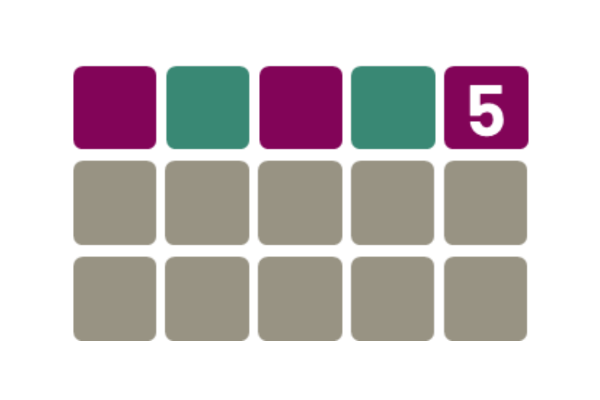
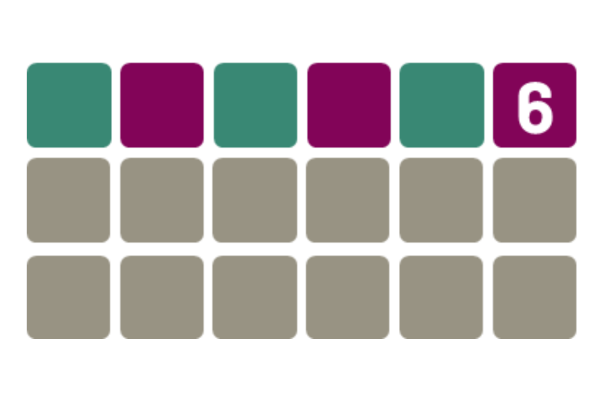
- mini nerdle (6 tiles) works well for younger classes or a quick starter.
- classic nerdle (8 tiles) suits a wide range of ages.
- maxi nerdle (9 tiles, extra math) suits older groups up for a meatier mathematical challenge.
- cross nerdle, a math crossword, makes a longer, richer group session where you can split the board between tables.
Teaching tip: before revealing the colours, ask the class to predict which tiles are green. It turns each guess into a reasoning exercise, not a lucky poke.
Independent practice, matched to each child
Because nerdle comes in sizes and levels, you can give every student the right challenge at the same time.
By size
micro → mini → classic → maxi: the same game, scaling from a 5-tile equation up to a demanding one for your fastest mathematicians.
By level
targets (levels 1 to 4), maffdoku (levels 1 to 3) and the sudoku-style grids all step up in difficulty, so you can point different tables at different levels.
Mental math practice
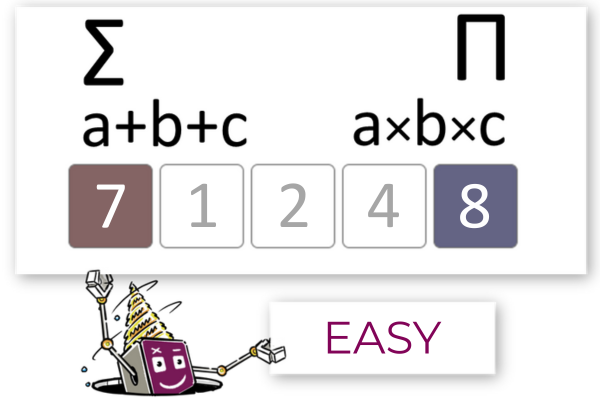
mathlete is our speed math trainer: short, timed drills that sharpen quick recall and mental arithmetic. It is ideal for a daily warm-up, a self-paced homework routine, or any student who just wants to get faster on their own.
Set your own challenges
Half the fun of our standard games is not knowing what the day will bring: maybe a simple addition, maybe a three-digit division. But when you want your nerdles to focus on one particular area of math, we have built some tools just for you.
- super nerdle generates a batch of nerdle links that match rules you set, game size, and which numbers or symbols appear in the answer. Perfect for targeting a specific skill (multiplication only, or single-digit answers).
- pro nerdle lets you type your own solution and share the link, as easy or as hard as you like. Great for differentiated homework.
- ready-made challenges: pre-built sets at varying difficulty, no setup needed.
Routine idea: use super nerdle to post five puzzles every Monday and challenge students to finish them by Friday. A "problem of the week" that runs itself.
Teacher accounts: ad-free classes and roadmap influence
Teachers get two things a regular account doesn’t:
- An ad-free experience for your whole class. Generate a class code and share it with your students, plus classroom versions of pro nerdle and nerdle cup.
- A direct line into what we build next. The teacher portal has a short feedback form we actually read, so the priorities (printables, class analytics, curriculum tags) come from teachers telling us what they need.
Set it all up on the nerdle teacher portal. If you already have a teacher account you can create class codes straight away; if not, it shows you how to activate one. It is free.
Pair students up for a duel
Quick one-on-one games make a great warm-up or reward activity.
- nerdDuel: a fast head-to-head number puzzle for two players.
- wordDuel: the word-game version, for a cross-curricular twist.
Run a class competition
- nerdle cup: set up a private cup for your class and run a league over days or weeks. Students play independently and are ranked by speed and accuracy.
- nerdle on Discord: if your class or club uses Discord, add the nerdle bot to play in-channel with automatic score tracking.
- Weekly challenge board: combine super nerdle with a printed leaderboard on the classroom wall.
popular classroom games



Nerdle at home
Nerdle is a friendly way to fit a little math into the day without it feeling like homework. It's screen time that makes children think.
- Play the daily puzzle together over breakfast; start with mini nerdle for younger children and move up as they grow.
- No account or login is needed for the core games, so children can play safely on any device.
- Print a mini nerdle worksheet for screen-free practice in the car or at the table.
Which games suit which age?
- Primary / elementary (ages 7 to 10): micro nerdle, mini nerdle, nanagram, targets level 1.
- Secondary / middle school (ages 11 to 14): classic nerdle, cross nerdle, maffdoku levels 1 to 2, nerdDuel.
- Upper secondary / high school (ages 14+): classic nerdle, maxi nerdle, quad nerdle, cross nerdle, maffdoku.
UK: roughly KS2, KS3 and KS4. Difficulty within many games is adjustable, so these are starting points rather than limits.
What skills does nerdle build?
- Mental arithmetic and number fluency, through every guess.
- Order of operations (BODMAS / PEMDAS): nerdle rewards understanding precedence, not just left-to-right.
- Times tables and factors, especially in targets and maffdoku.
- Logical deduction and systematic problem-solving, using the colour clues to narrow possibilities.
- Comfort with notation: equals, operators and multi-digit numbers, in a low-stakes, playful format.
Printables and books
- classic nerdle worksheet (PDF): printable grids for offline play.
- mini nerdle worksheet (PDF): shorter grids for younger students.
- nerdle puzzle books: printed books for classrooms or prizes.
Why teachers choose nerdle
- Free, with no login needed for the core games.
- Played in 50+ countries and featured in the press as a genuine math brain-teaser.
- Part of our Positive Numbers mission to make math a little less scary for everyone.
Ready to try it in class?
Put today's puzzle on the board and see how your students take to it.
play today's nerdle